By
Luka Stepan
, ON
You probably know your market better than we do
It's a fair question. And in terms of his customers and current market, the answer may well be: not much.
But I think it also points to an important distinction in how we approach new product development.
Deep knowledge doesn't necessarily mean a wide view
Talking to 500 customers instead of 50 can give you a much deeper understanding of your market. The same is true of having an excellent dealer network, analysing warranty claims or following every competitor closely. But more depth doesn't necessarily give you a wider field of view.
Most of these sources are looking at the same system from different positions.
Customers are experiencing today's products. Dealers are selling them. Competitors are developing the next iterations of them. Sales data tells you which ones people chose.
All extremely valuable. But all largely inside the category.
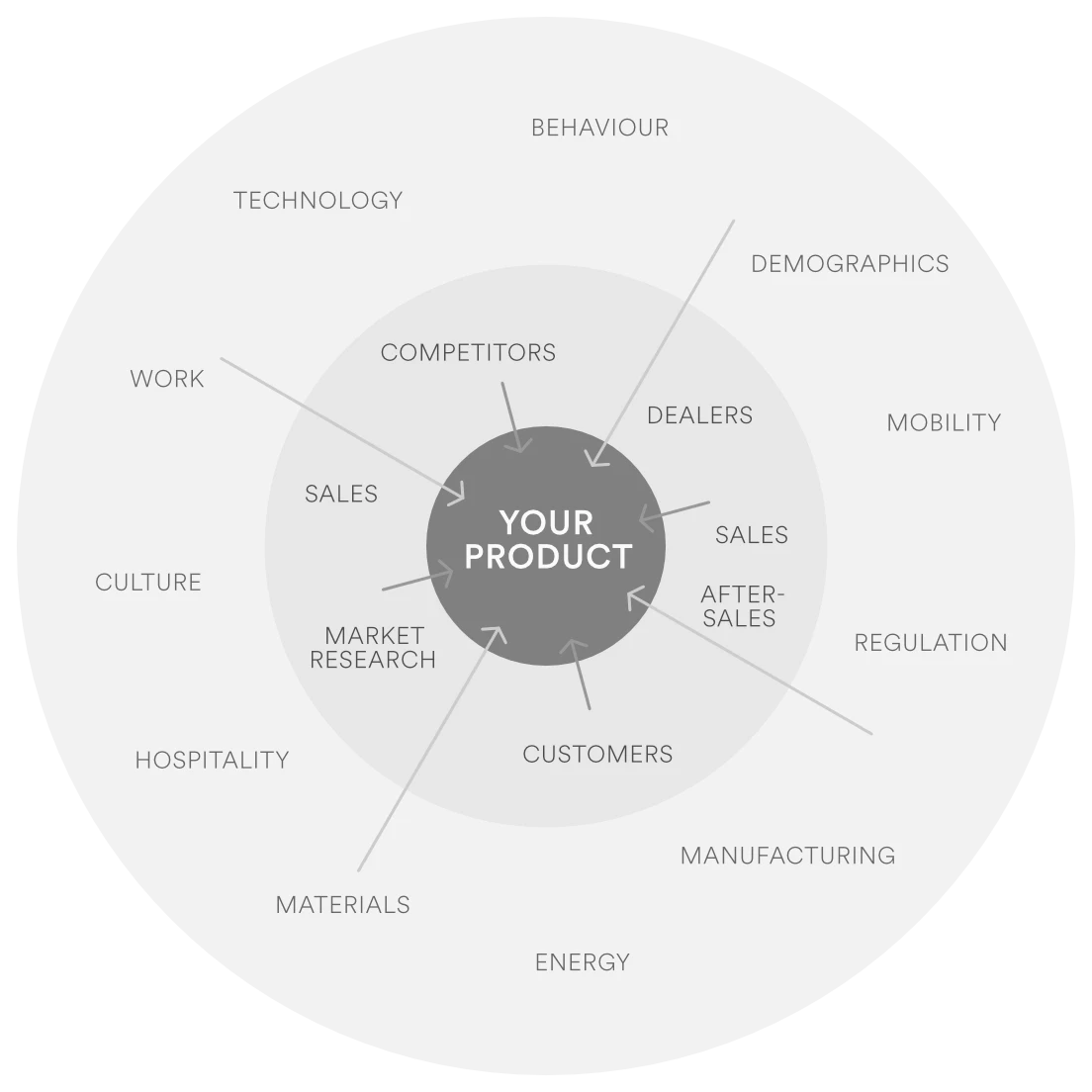
IMAGE: Your existing intelligence can be extremely deep while still observing a relatively bounded system.
The more interesting question is what is happening outside that system that could eventually change it.
Take energy as a simple example. A motorhome user can tell you that they want more autonomy. But developments in battery technology, domestic energy management, solar, electric vehicles and charging infrastructure may eventually change much more than the size of the leisure battery.
If energy becomes substantially cheaper, lighter and more abundant, some of the constraints around which we currently design the vehicle start to move. That can affect systems, packaging, weight, layouts and eventually how and where the vehicle is used.
The interesting insight isn't that batteries are improving. Everyone knows that.
It's what improving batteries might allow us to reconsider.
The same applies to an ageing population, remote work, autonomous driving, new manufacturing technologies or changing models of ownership. None of these developments are particularly difficult to discover.
The difficult part is recognising when something happening elsewhere becomes relevant to a product decision in your own category.
Market intelligence and opportunity intelligence
This is where I find the distinction between market intelligence and opportunity intelligence useful:
Market intelligence helps you understand the world your product competes in.
Opportunity intelligence asks what might change that world, and what that change could make possible.
Neither works particularly well on its own.
A new technology without a meaningful customer problem is just an interesting technology. A broad trend without enough understanding of the category produces generic opportunities. On the other hand, a customer problem considered only through the products and solutions already available can easily lead to another incremental improvement.
The interesting territory is where deep market understanding meets a wider field of view.
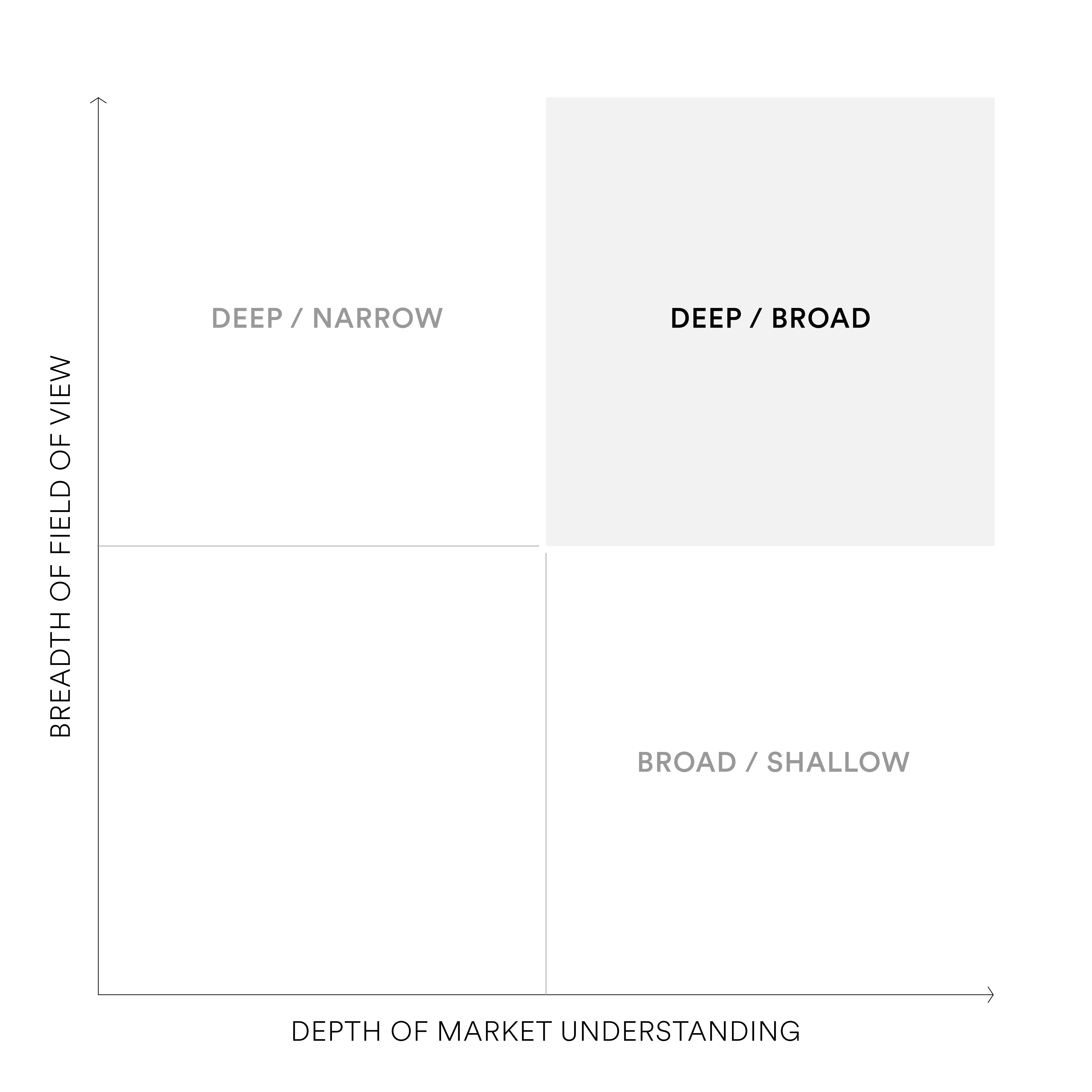
IMAGE: Looking wider isn't enough. The value comes from combining a wider field of view with deep market understanding.
You're making a bet on a market that doesn't exist yet
This matters particularly in the industries we work in.
A new caravan, motorhome or boat isn't conceived and launched next month. Important decisions made today may define a product that reaches customers several years from now and remains on the market for many more.
So when you're deciding what to develop next, you're not only responding to what customers value today. You're making a bet about what they will value when that product reaches them.
That doesn't mean trying to predict the future. It means looking beyond the immediate category early enough to recognise changes worth investigating, and then bringing those possibilities back together with the customer, dealer and product knowledge you already have.
You need both
Which brings me back to the original challenge.
Our potential client probably does know his customers better than we do. His dealer network probably gives him market knowledge we couldn't reproduce from the outside.
We shouldn't try to replace either.
But depth of market knowledge and breadth of opportunity are different things.
When you're deciding what to build next, you need both.
Want more insights like this? Connect with Sito on LinkedIn or subscribe to our newsletter.