By
Luka Stepan, Principal
, ON
How to Cultivate the Design Environment That Delivers Business Value
Phases of a Design Process
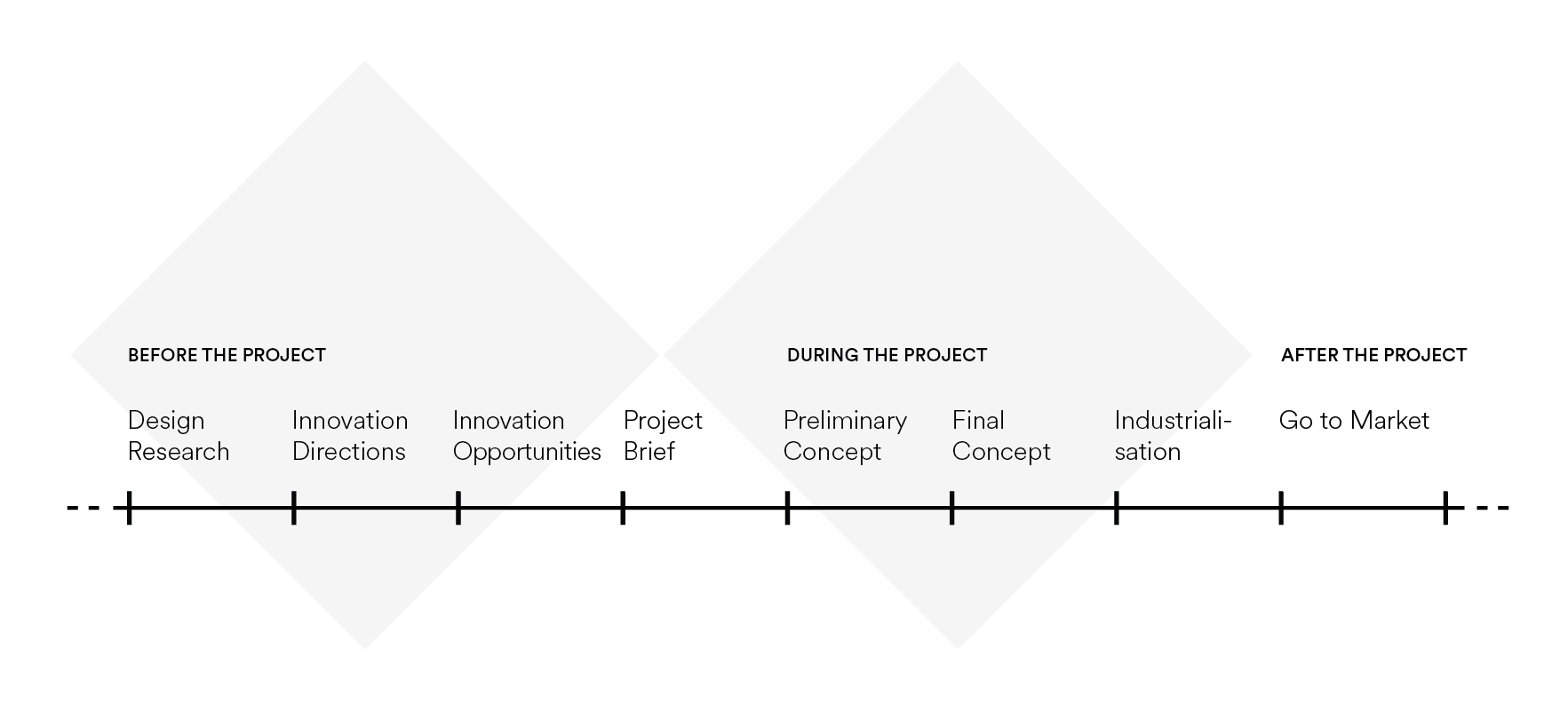
The design process is inherently non-linear and iterative - things are often revealed during the process, and initial concepts evolve through continuous feedback and refinement. Design processes often involve eight main phases:
Before the Project
1 When Do We Need to Include Designers?
Inclusion of design becomes urgent when the evolutionary development of your products or services begins to drift into mediocrity, causing you to compete solely on price. Design creates opportunities for differentiation and is essential for improving product, manufacturing, and service quality, as well as increasing market capitalisation.
2 How to Successfully Integrate a Designer into Your Team
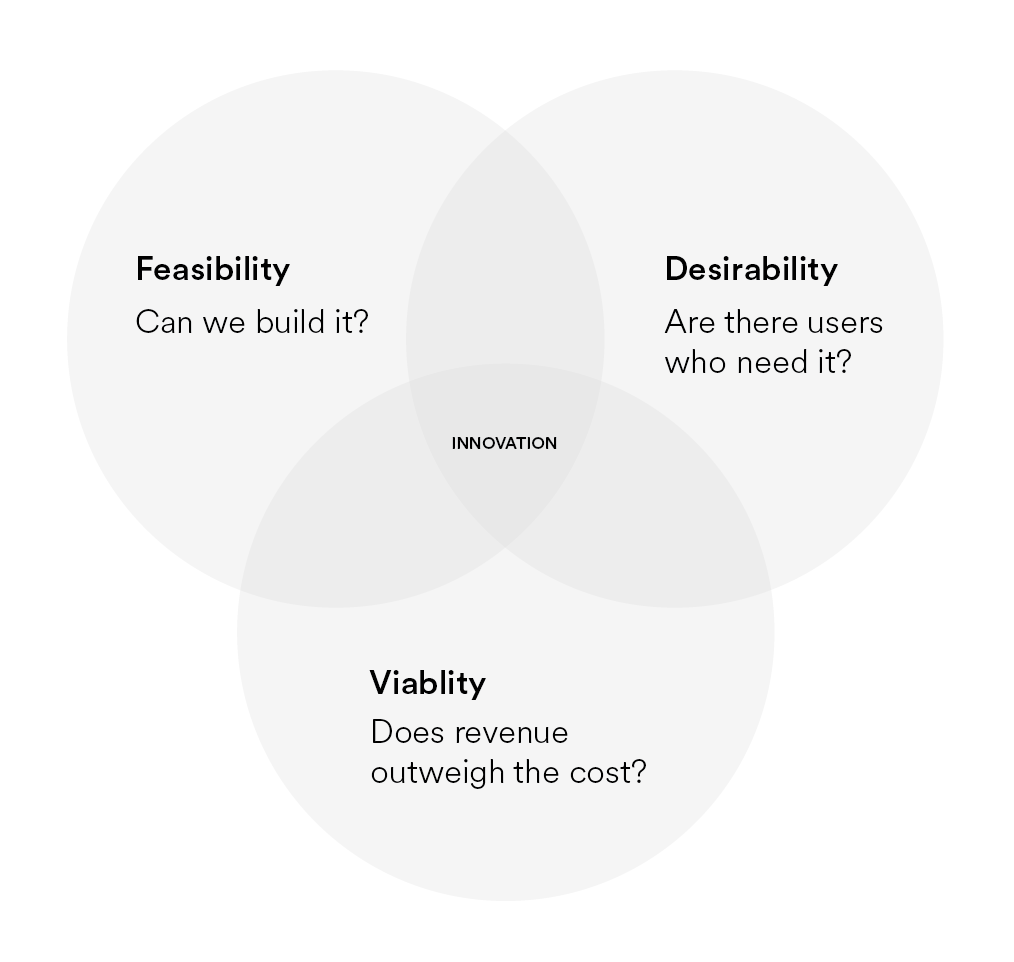
Design is one critical part of the "Product Triad," along with Product Management (focusing on the business aspect/profitability) and Technology (focusing on production capability/feasibility). The designer’s unique and essential role in this triad is to act as the advocate for the user.
If you are considering your first internal design hire, the designer should be placed at a sufficiently high position, such as Design Director or Design Manager, to strategically organise processes and influence outcomes. Hiring an inexperienced designer to fulfil only operational functions or reduce initial risk is a common mistake that often leads to negative outcomes.
For a designer (internal or external) to be effective, certain conditions must be met:
Clear Business Goals: The company must have clear business goals to guide the designer’s work.
Decision-Making Authority: The designer must be empowered to make decisions within their creative domain.
Support for Iteration: Management must understand that design is an iterative process where the first solution will likely not be perfect, and subsequent steps will refine the business idea.
Stakeholder Availability: Key stakeholders (e.g., marketing, R&D, IT, sales, leadership) must commit to being available at crucial points in the process to provide necessary feedback and approvals.
3 How to Brief Designers
The design brief is the key legal and content document that serves as the starting point for all subsequent work, guiding the process and serving as a reference in case of conflicts. If the initial input from the client is unclear, it is the designer's responsibility to propose a "rebriefing" to clarify the direction.
A quality brief must address four key components:
Why? What is the core business reason for the project (e.g., increasing sales, building brand value, solving a market problem)?
What? What specific challenge or opportunity (often derived from research) is the project addressing? Define KPIs, here it is more important to be accurate (i.e., setting the right goal on initial research) than precise (detailed, quantitative measurements).
For Whom? Clearly define the target audience, user segments, their needs, motivations and alternative solutions they use (not just direct competitors).
How? Define the project constraints, limitations (e.g., timeline, budget, technological restrictions, existing distribution channels), the team involved and expected deliverables.
4 How to Budget Design
The value of the design investment should correlate with the risk involved in the new product or service. Projects with higher risk and complexity require greater investment in specialised and experienced teams and processes.
For Slovenian companies, refer to "Recommendations for valuing design services" (🔗 Priporočila za vrednotenje oblikovalskih storitev) to get an inital feeling for budgeting.
The highest risk in any project is in the Discorvery & Concept development phase because the problem and the potential solution are most unclear. This is where companies should invest the most. For an ambitious project, consider allocating 30% on Discovery and Research (to ensure you are tackling the right problem), around 50% on Concept Development and Design Conceptualisation (the creation of new value), and around 20% on Execution/Implementation.
5 Common Mistakes Before the Start of the Project
Neglecting Research and solving the wrong problem: Not investing in research or validating whether the product is truly needed in the market. This often results in substantial investment leading to products that have no market differentiation or uptake.
Vague Goals: Starting without clear objectives means searching for value rather than strategically achieving it.
Poor Design Partner Selection: Choosing a designer without experience with your industry or similar projects.
Providing Locked Solutions: Presenting the designer with an already defined solution (e.g., an internal idea from R&D) that hasn't undergone market validation.
Lack of Commitment: Key decision-makers fail to involve themselves at crucial milestones (which leads to endless refinement cycles).
Confusing Brief with To-Do List: The brief should not merely be a list of required features but a statement of strategic, project-level challenges and objectives.
During a Project
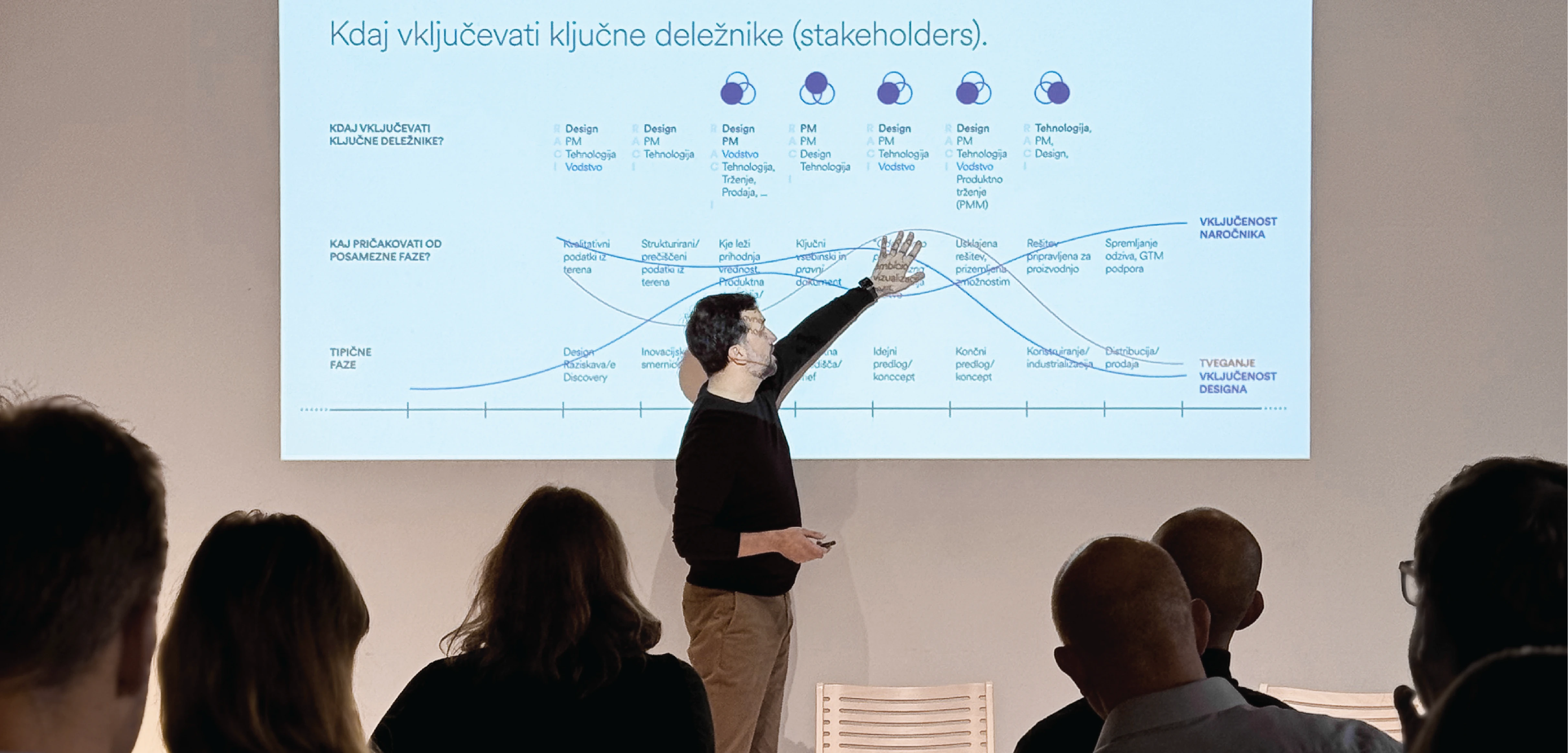
6 Trust the Iterative Process
The first Design Concept is often deliberately slightly pre-ambitious. This is the only point in the process where the designer may go beyond the initial brief to gauge the client's ambition, test boundaries, and potentially uncover completely new, previously unconsidered solutions or opportunities that could change the manufacturing process or business strategy. Don’t worry, designers are used to finding compromises and making concepts work within your capabilities.
7 Give Feedback
Feedback should transition from subjective preference (e.g., "I don't like it") to objective assessment based on the defined brief and business context. When providing feedback, articulate what you observe (e.g., "This design has too many lines, which makes it aesthetically complex"), then link it back to the business goals in the brief (e.g., "The brief called for a robust/simple solution"). This objective approach ensures that the design team understands the goal (in this case, reducing complexity and increasing robustness).
8 Solve Conflicts
Conflicts often arise because stakeholders focus on symptoms rather than the underlying problem; whether the issue relates to functionality, aesthetics, cost, or production/technology limitations. If a conflict arises due to a change in goals that necessitates a major shift (a re-brief), this represents a change in scope and may require discussion about additional time or budget, as the work was not initially foreseen.
9 Common Mistakes During Projects
Late Technology Inclusion: Including the technology/development team too late in the process often results in the solution being technically unfeasible, leading to unnecessary reworks and delays.
Lacking Milestones: If decision-makers are absent, the process can enter endless, repetitive cycles that focus on non-essential details without adding strategic value.
Decision by Preference: Making creative decisions based on personal taste rather than objective market needs, business goals, or validated feedback
After a Project
10 Preserving Design Intent
During the Technical Execution/Industrialisation phase, the designer must remain involved, even if passively, to consult on production challenges. This is crucial to ensure the original "design intent" (the strategic purpose and vision of the solution) is not lost or lowered due to technological compromises or production constraints.
11 Evaluate/Measure Impact
Measuring the value of design is paramount, though often complex. While increased sales and profit per unit are key indicators of market success, design value extends far beyond these short-term economic factors. Design contributes significantly to differentiation, cost reduction through systematic approaches, improved user satisfaction, health benefits, sustainable development, and cultural diversity.
Field of Impact | Contribution Examples |
|---|---|
Organisation | Differentiation, increased profit per unit, visual consistency, cost reduction (systemic approaches), improved brand image and recognition. |
Individual | Addressing unmet needs, raising satisfaction, easing learning, health benefits, improving the aesthetic quality of life. |
Society | Greater cultural diversity and inclusion, better channeling of technology, preparing for climate change, sustainable development, promotion of the national economy. |
Source: Robert Ilovar and Ajda Schmidt, Oblikovanje vrednosti: Vrednost in učinki oblikovanja vidnih sporočil ter dejavniki, ki vplivajo nanje
Want more insights like this? Connect with Sito on LinkedIn or subscribe to our newsletter.